Friday, 13 January 2023

Product Liability Provision in Construction Contract

It is typical to ask for Product and Public Liability Insurance in a construction contract. This is to manage the associated risk (e.g., during the construction, if a client’s property was damaged).

Also, getting an indemnity from the contractor for liabilities related to the product is recommended. The advantage of having an indemnity clause is that it provides certainty for who is liable for losses without having to prove fault.

For example, the indemnity clause could state that:

·         The Contractor shall indemnify the Client from and against any liability in respect of:

o    damage to the Company’s property;

o    injury or death of any person;

o    breach of any statutory duty or regulation; and

o infringement of any intellectual property rights.

The law associated with product liability is covered by:

·         Law of tort (Negligence);

·         Contract; and

·         Related consumer protection legislation (Australia - Competition and Consumer Act 2010).

You can recover the loss under the contract if there is an indemnity clause. In the absence of such a provision, you can still recover under the law of tort or under the respective consumer protection legislation.

As the Client QS who is drafting the contract, you must try to get indemnity for all the potential risks/liabilities identified in your risk assessment exercise. On the other hand, as the Contractor QS, you must try to avoid giving indemnities during your contract review exercise (but agree to any fair indemnities). Specifically, you should not agree to indemnify generally or too broadly (e.g., indemnify liability with respect to breach of contract - this is too broad) but agree only for specific losses (e.g., indemnify liability with respect to any negligence - this is narrow).


Note: The article was also published on www.aact.lk


Monday, 1 August 2022

Application of businesslike and common sense to interpret insurance terms.

 Application of businesslike and common sense to interpret insurance terms.

With reference to Acciona Infrastructure Australia Pty Ltd v Zurich Australian Insurance Limited [2023] FCAFC 47 case


In a 19.5Km long road construction project, the Client obtained the Works insurance, and it indemnified the Contractor.

The insurance covers the Project Site(19.5Km long road); an exclusion of the insurance is provided below.


Due to the heavy rain, a section of the road was damaged. There were four weather stations located in the region, but only one weather station recorded the heavy rain as a 1-20 event. Even the nearest weather station to the damaged section has not recorded the rain as a 1-20 event.

 (Lesson learned- If multiple weather stations relate to the project, clarify which station you consider.)


The contractor argues that “location insured” means the entire Project Site. So, the damages shall be compensated by the insurance policy, as one weather station recorded a 1-20 event.

The insurer contended that; location insured” means the location of the damage. So, the damage shall not be covered under the insurance policy, as the weather station near the “location insured” does not trigger the exception to the exclusion, i.e.1-20 event.


The court accepted the insurer’s position, considering a businesslike and common sense approach.


“It is common ground that the Project, being road construction, extended over a lengthy geographical area within which the intensity of a single rainfall event might vary considerably from place to place. In these circumstances, it is difficult to see the logic in ascertaining the intensity of the event causing the damage, to which the insurance would apply, by reference to the intensity of the same event obtaining at some distant part of the Project Site.” (para 23)


“The “location insured” can sensibly be understood as the location insured in respect of the particular claim, being that location where the damage occurred for which the insurance would be relevant.” (Para 27)


Definitions:

Businesslike - happening in a way that is practical and effective.

Common sense - the ability to use good judgment in making decisions and to live in a reasonable and safe way

References:

https://dictionary.cambridge.org/

Case - https://jade.io/article/971281

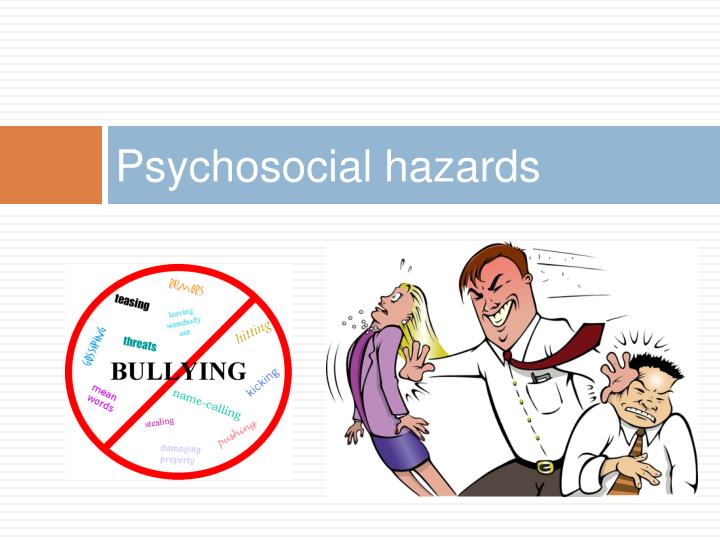
Image - https://image.slideserve.com/562333/psychosocial-hazards-n.jpg


Note: The article was also published on www.aact.lk

Monday, 10 January 2022

The adjudicator shall resolve only the dispute referred to them

 With reference to Downer EDI Works Pty Ltd v Steensma [2022] WASC 396


During any Adjudication, a set-off issued before a payment claim shall not form part of a payment dispute unless either it’s the subject of the payment claim or it is stated in the rejection response of the payment claim.

This was held in the Downer EDI Works Pty Ltd v Steensma [2022] WASC 396 case heard by the Supreme Court of Western Australia.

During the adjudication hearing, the adjudicator rejected Downer’s set-off claim, even though it neither formed part of the payment claim subjected to the adjudication nor was stated in their rejection of Steensma’s payment claim.

The Supreme Court decided the case in favour of Downer and held that the adjudicator did not have jurisdiction to determine Downer’s set-off claim and had fallen into jurisdictional error by doing so.


I trust that a similar principle will apply to other dispute resolution methods like arbitration. Arbitrators shall resolve only the dispute referred to them.


Adjudication - Adjudication is a contractual and statutory means of dispute resolution used largely in the construction industry in countries like Australia and the UK.


Case - BarNet Jade - Find recent Australian legal decisions, judgments, case summaries for legal professionals (Judgments And Decisions Enhanced)


Image - https://image.slideserve.com/562333/psychosocial-hazards-n.jpg


#adjudication #aact #qsonline #constructioncaselaw #contractlaw #variations #softskills


Note: The article was also published on www.aact.lk

Monday, 23 August 2021

Case Law

Eco World – Valleymore Embassy Gardens Company Limited v Dobler UK Limited [2021] EWHV 2207 (TCC) Judgment of the TCC 3 August 2021


Facts: C completed two blocks, and E has taken possession. The third block was delayed, and therefore E applies LD. No provision in the contract to reduce LD in case of partial completion.

Issue: C argued that E can not apply the contract LD rate for the 3rd blocks and shall apply the proportionated LD rate only to the delayed 3rd block.

Held:
* Should the proportionate only block 3? No, LD shall apply until the contractor reaches the PC for the whole of the contract.
* Is the amount an LD or a penalty? - LD rate reflect the parties intention, and it’s not a penalty


Note: There are no such issues with FIDIC contracts as FIDIC has a provision to proportionate the LD in such circumstances.

Red Book 1999- 18.2 – “…….If a Taking-Over Certificate has been issued for a part of the Works (other than a Section), the delay damages thereafter for completion of the remainder of the Works shall be reduced. ……”
Related Posts with Thumbnails