Friday, 1 November 2024

Ceremonies and Cultural Aspects in the Construction Industry

Any construction will occur in a country with a unique culture and traditions. So, there are certain cultural things will take place on construction sites. The contractor may even practice their cultural stuff on the site if the contractor is a foreign company.

Even if we educate in science(s) innovated/ developed in the Western world, there is no issue in practice or adapting our cultural things in our industry.

This article discusses the various events conducted in construction projects in various countries.

Topping out ceremony

A topping-out ceremony is a construction tradition that has been occurring to celebrate project milestones. Traditionally, this ceremony occurs when the final concrete/ final structural beam is raised into place/ when the highest beam is placed/the last roofing piece. This typically includes a party with the participation of the project team and other stakeholders like the Client, media personalities, prospective buyers, etc. This is a good event in terms of marketing for the buyers to communicate that their product is nearing completion. Another historical belief is that Native Americans believed no structure could be taller than the trees, so they placed a tree in the final and highest beam.

 During ceremonies, they place an evergreen on top of the building, which usually stays on top until the building is finished.

 David, states in one of his articles that this has some ancient root. According to him, during the pre-Dark Age(5th century-11th century), in the Scandinavian cultures (Denmark, Norway, and Sweden), a tree was placed on top of a new building. The purpose was to appease the tree-dwelling spirits of their ancestors that had been displaced. Further, he states that during the 14th century in England, it was customary to put a yew tree branch at the highest point of the building to keep evil spirits at bay.


https://www.oxfordlearnersdictionaries.com/definition/american_english/evergreen


 http://www.scientiaproject.monte.nsw.edu.au/post/topping-out-ceremony


https://miron-construction.com/blog_entries/what-is-a-topping-out-ceremony/

This article (written by David) also provides more insight into this ceremony. https://www.linkedin.com/pulse/20141106224320-128875744-what-do-you-know-about-the-tradition-of-topping-out/

See the video below of a topping out ceremony.

https://www.facebook.com/watch/live/?ref=watch_permalink&v=3537842272921945


Ground-breaking ceremony

A common ceremony in construction projects is ground-breaking (cutting, sod-cutting, turning the first sod, or a sod-turning ceremony). This ceremony aims to celebrate the commencement of the construction project. The ground-breaking ceremony is usually attended by the Client, contractor's management and even politicians and businesspeople to generate interest in the project. During the ceremony, key personnel will break the ground to mark the commencement of construction.

According to Wikipedia, The first documented ground-breaking ceremony occurred in ancient China in 113 BC.

https://en.wikipedia.org/wiki/Groundbreaking


 Opening Ceremony

The opening ceremony may include a ribbon-cutting function by a special guest to mark the official opening of a building. The construction team, together with the consultant and client team, will take part in the ceremony. Many distinguished guests, including media personnel, may also be invited to get public attention, especially for marketing. The ceremony

 Apart from those widely spread worldwide, each country has its ceremonies. Below are such ceremonies. These are essential milestones in a construction project.


 Foundation stone laying ceremony

During the ground-breaking ceremony of a larger-scale construction project or even in small-scale residential construction projects before they start the masonry works, certain countries have a tradition of laying the 1st stone ceremonially. In residential projects, the foundation stone is not a cement block or engineering brick we use for the construction but a special block/unit that contains various herbal and other ingredients. However, in larger-scale projects, it may be cement blocks. The ceremony usually consists of religious work, too.


Place a special block/unit and cover it with mortar (Location: Sri Lanka)

Source: https://fim.cmb.ac.lk/foundation-stone-laying-ceremony-for-the-new-building-institute-of-indigenous-medicine-university-of-colombo/


Traditional religious and cultural activities. (Location: Sri Lanka)

Source: https://fim.cmb.ac.lk/foundation-stone-laying-ceremony-for-the-new-building-institute-of-indigenous-medicine-university-of-colombo/


Traditional religious and cultural activities. (Location: Sri Lanka)

Source: https://fim.cmb.ac.lk/foundation-stone-laying-ceremony-for-the-new-building-institute-of-indigenous-medicine-university-of-colombo/


Placing a special block/unit and having it covered with mortar by a group of guests. (Location: Sri Lanka)

 Source: https://www.zamzam.lk/foundation-stone-laying-event-for-green-community-experience-centre/


Placing a cement block and have it covered with mortar by a group of guests. (Location: Sri Lanka)

Source: https://cmb.ac.lk/foundation-stone-laying-ilc


Traditional religious and cultural activities(Location: Sri Lanka)

Source: https://cmb.ac.lk/foundation-stone-laying-ilc


 1St Steel Cut Ceremony

For the first time, I heard about this ceremony some time ago through a LinkedIn post by another professional. Although I am not fully aware of all the ceremony details, it appears that they organize it to celebrate the first ceremonial cut of steel, as the name suggests.

Source: LinkedIn post from Najmuddin Afham (Location: Middle East)


Keeping the First Door Frame and Jump over the Door frame.

This marks another ceremony frequently observed in residential construction projects across some regions of the world. In this ritual, a carpenter, attired in white clothing, jumps through the door frame into the house after placing a few of his tools inside the house through the door frame. This event usually unfolds at an auspicious moment determined by local traditions and is further enriched by customary practices.

 See the video below to understand the tradition.

https://www.youtube.com/watch?v=cQd-Km--5r4  (Location: Sri Lanka)

https://www.youtube.com/watch?v=emQg_IfqOWY  (Location: Sri Lanka)


Keeping the First Roof Tile

This ceremony is often observed in residential construction projects within certain cultural contexts. During this occasion, the homeowner typically prepares milk rice and other traditional dishes as a celebratory gesture to mark this milestone of the construction project.


If you are aware of any similar cultural practices or events in your region, please send me an email containing additional details, including photographs and videos, so that I may enhance and update this article.


 Note: The article was also published on www.aact.lk 


Wednesday, 10 April 2024

Interpretation of implied terms and importance of having a well-written IP clause in a construction contract.

With reference to Realestate.com.au Pty Ltd v Hardingham RP Data Pty Limited v Hardingham [2022] HCA 39 case


When we draft a contract, we shall make clear the intellectual property, copyright, and moral right obligations. Generally, clients are asking to transfer to them the IP rights created under the contract and grant them a license to use the background and third-party IP rights in connection with the contract.

When licensing the rights, one must carefully consider the extent of such transfer. Especially as the Client may transfer the right to a further party whose terms are not known to the contractor (as happened to REMA in the below-addressed case)

The photographer (REMA) entered into verbal agreements with real estate agencies to supply photographs of the properties. There were no written contracts signed. It was known to the parties that the agencies would upload the photos to a well-known real estate website, i.e., Realestate.com.au Pty Ltd (REA). Under the terms of REA, which agencies accept when uploading photos, REA can sub-license the content as it desires. Under that term, REA granted a license to RP Data Pty Limited (RP Data) (data and analytics property platform). RP Data then reproduced REMA’s photos for use on their platform. REMA sued RP Data for copyright infringement. This further proceeded to the High Court following the Federal Court decision.

The High Court states that:

“a reasonable person in the position of the parties would have known that one of the very purposes of REMA providing the photographs and floor plans to the agencies was so that the agencies could provide them to REA and that the agencies had no real choice other than to accept a term requiring them to provide a license to REA to use the photographs and floor plans indefinitely and to provide them to RP Data” (Para 113)

Therefore, the High Court held that the RP Data did not infringe copyright.

The High Court also refers to the grounds to consider the sub-licensable IP right an implied term.

"Apart from being reasonable and equitable, capable of clear expression and non-contradictory of the express terms of the contract, to be implied, a term must be necessary to give business efficacy to the contract (which will not be satisfied if the contract is effective without it), and it must be so obvious that “it goes without saying” (Para 18)


Case:39 (hcourt.gov.au)

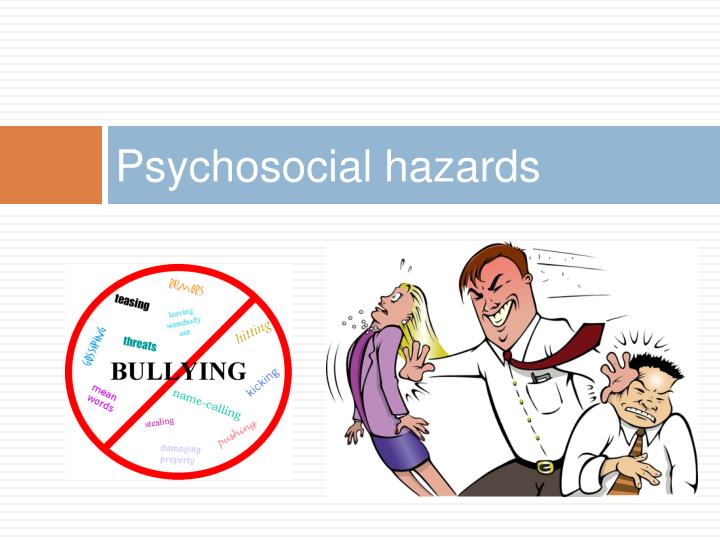
Image - https://image.slideserve.com/562333/psychosocial-hazards-n.jpg


Note: The article was also published on www.aact.lk

Wednesday, 15 November 2023

Who is liable for a contract, either the personal signed the contract personally liable or his company?

With reference to Xiao v ACT Commercial Builders Pty Ltd [2023] ACTSC 44


It depends on the way they execute the contract.  In case of court proceedings, the court will decide it objectively (NOT subjectively), considering the contract document as a whole and on the basis of admissible surrounding circumstances known to the parties

(Objectively??? Subjectively??; ask me the difference if you don’t know as a comment)

Recently (2023), Mr. Xiao was to be liable for a debit to a builder personally but not by the Company he performed as a director.

Let’s understand the way someone should execute a contract to avoid getting into trouble like Mr. Xiao.

·         Make clear under what capacity you sign the contract (on a personal level or for the Company)

·         Details of your capacity must be clearly and consistently mentioned in the contract

If the contract is executed in the capacity of Director, make it clear with reference to the Corporation Act. See the below example with reference to the Corporation Act in Australia.


Executed as an Agreement

Executed by ABC Pty Ltd pursuant to Section 127 of the Corporations Act 2001 (Cth):


}

}

}


. . . . . . . . . . . . . . . . . . . . . . . . . . . . . . . . . . . . .
Signed by Company Secretary/ Director


. . . . . . . . . . . . . . . . . . . . . . . . . . . . . . . . . . . . . . .
Signed by director


. . . . . . . . . . . . . . . . . . . . . . . . . . . . . . . . . . . . .
Name


. . . . . . . . . . . . .. . . . . . . . . . . . . . . . . . . . . . . .
Name


. . . . . . . . . . . . . . . . . . . . . . . . . . . . . . . . . . . . .

Date


(Executed as an Agreement??? Executed as a Deed??? What is the difference, let’s ask as a comment so, we can discuss)


Now, let’s have a look at how Mr Xiao getting into much trouble.

In the first court, it was held that Mr. Xiao was personally liable for the builder. So, he appealed to the appellate court.

In the subject contract, following were identified and considered by the court when taking the decision:

· Mr Xiao did not write that he was authorised to sign on behalf of another or invoke section 127 of the Corporations Act 2001 (Cth)

·         None of the other directors of the company added their signature to the contract,

·         Even though he wrote down the company address, it was also his personal address.

·         Even though he wrote down the company ABN, he did not identify that number as the company's ABN.

·         He did not even name the company anywhere on the contract,

 “Mr Xiao’s submissions as to the evidence overlooked the objective theory of contract.  The first matter relied upon was the fact that Mr Xiao gave evidence that, when he signed the contract, he understood that he was signing it on behalf of BBSJ Partners Pty Ltd.  In fact, what he said was that he understood he was signing on behalf of “the business”, which is quite different.  In any event, his understanding is irrelevant.  The test is objective.”


Case: https://courts.act.gov.au/supreme/judgments/xiao-v-act-commercial-builders-pty-ltd


Note: The article was also published on www.aact.lk

Thursday, 13 April 2023

IChemE introduced a standard condition of contract for the Construction Management procurement method.

Among the well-known procurement methods, Management types, i.e., Management Contracting and Construction Management, are two different procurement methods. In the Management Contracting type, there is no contractual link between the Client and Package contractors; the Management Contractor has contracts with each package contractor. In contrast, the Client has a direct contractual link with package contractors in the Construction Management procurement method.


What are the standard conditions of contract you can use with the Construction Management procurement method? FIDIC Yellow book suits Design and Build procurement methods, the Red book suits Separated procurement methods, and the Silver book suits EPC/Turnkey procurement types, but there is no book published by FIDIC specifically for the Construction Management procurement method. Even not by NEC. Anyway, the JCT has developed a standard form of contract for the procurement method. Construction Management Contract | RIBA Books


The Institution of Chemical Engineers (IChemE) introduced a new standard condition of contract to suit engineering, procurement and construction management (EPCM) or, in other words, suit for the Construction Management procurement method.

Under an EPCM contracting arrangement (or in our term Construction Management procurement method):

• The Client has a direct contractual link with package contractors

• The Client appointed EPCM contractor (in our term Construction Manager) is appointed to provide engineering and design services, manage the procurement of the package contractors and later manage the package contractors during the construction stage.

• The EPCM contractor (in our term, Construction Manager) does not actually do any construction work itself.

Even though the prime aim of Blue Book is to be used with process plants and manufacturing facilities, it is also suitable for a range of performance-related projects such as nuclear power production, water desalination, tunnelling and high-voltage distribution.

The View-only PDF version is available on a 12-month license.


The Blue Book, EPCM Contract, 1st Edition, 2023, View Only PDF | IChemE


Note: The article was also published on www.aact.lk


Friday, 13 January 2023

Product Liability Provision in Construction Contract

It is typical to ask for Product and Public Liability Insurance in a construction contract. This is to manage the associated risk (e.g., during the construction, if a client’s property was damaged).

Also, getting an indemnity from the contractor for liabilities related to the product is recommended. The advantage of having an indemnity clause is that it provides certainty for who is liable for losses without having to prove fault.

For example, the indemnity clause could state that:

·         The Contractor shall indemnify the Client from and against any liability in respect of:

o    damage to the Company’s property;

o    injury or death of any person;

o    breach of any statutory duty or regulation; and

o infringement of any intellectual property rights.

The law associated with product liability is covered by:

·         Law of tort (Negligence);

·         Contract; and

·         Related consumer protection legislation (Australia - Competition and Consumer Act 2010).

You can recover the loss under the contract if there is an indemnity clause. In the absence of such a provision, you can still recover under the law of tort or under the respective consumer protection legislation.

As the Client QS who is drafting the contract, you must try to get indemnity for all the potential risks/liabilities identified in your risk assessment exercise. On the other hand, as the Contractor QS, you must try to avoid giving indemnities during your contract review exercise (but agree to any fair indemnities). Specifically, you should not agree to indemnify generally or too broadly (e.g., indemnify liability with respect to breach of contract - this is too broad) but agree only for specific losses (e.g., indemnify liability with respect to any negligence - this is narrow).


Note: The article was also published on www.aact.lk


Related Posts with Thumbnails